
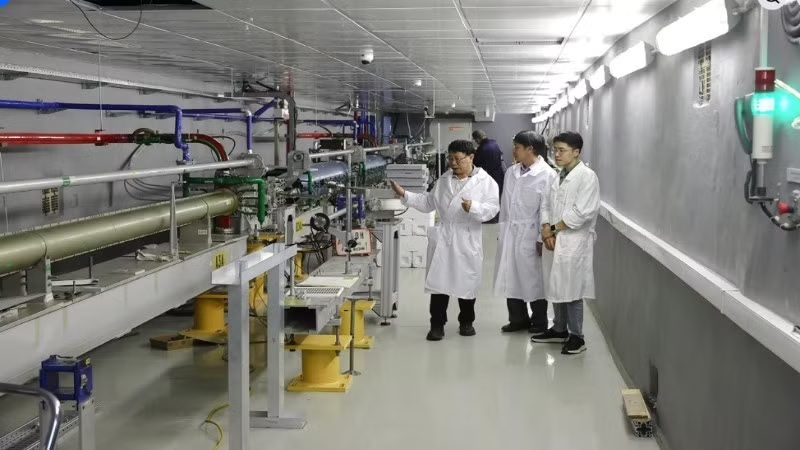
Fundamental Research as a Foundation for Developing High-Quality Human Resources
Fundamental research serves as the foundation of the entire scientific and technological system. It is a type of research aimed at exploring the laws, nature, and phenomena of the natural world without an immediate focus on direct practical applications.
This type of research is fundamental in nature and generates new knowledge for humanity. Without fundamental research, major discoveries would not be possible, nor could advanced technologies be developed. The history of science has demonstrated that most modern technologies today originate from fundamental research. Achievements such as artificial intelligence, quantum technologies, new materials, semiconductor technologies, and nuclear energy all stem from fundamental research conducted over previous decades. Based on the results of fundamental research, humanity can develop new technologies and apply them in production and daily life.
In developed countries, fundamental research is often directed toward breakthrough discoveries aimed at maintaining leadership in science and technology. These countries have a large pool of experts, modern laboratory systems, and strong financial resources to support long-term investment in fundamental research.
For Vietnam, in our view, the objectives of fundamental research at the current stage should differ from those of developed countries, as Vietnam remains a developing country with limited scientific and technological capacity. The primary goal of fundamental research in Vietnam is not necessarily to pursue breakthrough discoveries, but rather to develop a highly qualified scientific and technological workforce.
This workforce serves as the core force for acquiring, mastering, and applying advanced global scientific and technological achievements in the country’s development process. A nation without a strong scientific and technological workforce cannot effectively absorb and utilize the world’s advanced achievements.
Importing machinery and technologies from abroad is only the initial step; more importantly, a country needs qualified experts capable of operating, improving, and further developing these technologies to suit domestic conditions. Without high-quality human resources, Vietnam will remain dependent on foreign technologies and face difficulties in achieving sustainable development.
At present, Vietnam is facing a serious shortage of highly qualified scientific and technological personnel. The number of leading experts in many fields remains limited, while the demand for economic development and national industrialization continues to grow.
Many high-tech fields, such as semiconductor technology, quantum technology, biotechnology, and artificial intelligence, require specialists with deep professional expertise and the ability to conduct independent research. Fundamental research provides an ideal environment for developing this workforce. Through participation in fundamental research activities, young scientists are trained in creative thinking, analytical skills, and problem-solving methods. These are core competencies that enable them to access, master, and further develop modern technologies.
Currently, Vietnam has set a goal of achieving high economic growth rates, with a vision toward double-digit GDP growth in the future. To achieve this goal, science and technology must become a key driver of the economy. However, this can only be realized when the country has a sufficient pool of highly qualified scientific and technological personnel developed through fundamental research programs.
International Cooperation to Narrow the Gap in Fundamental Research
One of the major challenges in implementing fundamental research in Vietnam is the shortage of modern and well-integrated laboratories. Fundamental research in the natural sciences and technology requires highly expensive experimental equipment systems, complex technical infrastructure, and substantial financial resources for operation and maintenance.
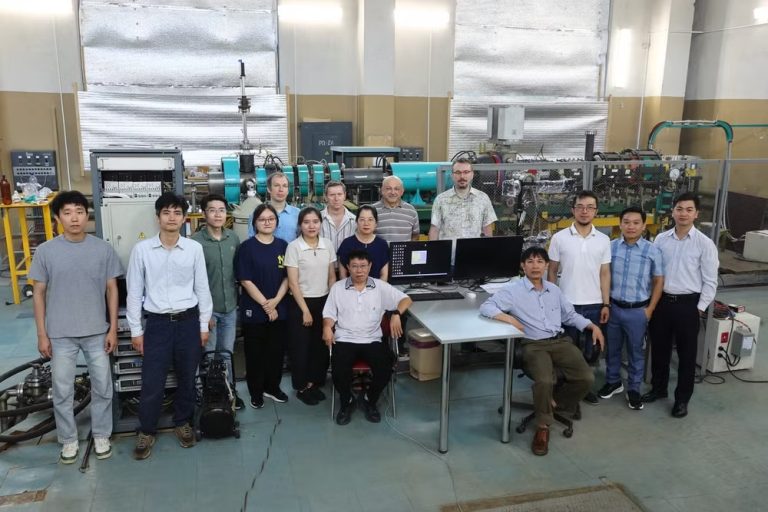
One of the major challenges in developing fundamental research in Vietnam is the shortage of modern and well-integrated laboratories. Fundamental research in the natural sciences and technology requires highly expensive experimental equipment systems, complex technical infrastructure, and significant financial resources for operation.
For example, research in nuclear physics requires advanced equipment such as particle accelerators, nuclear reactors, high-precision spectrometers, and advanced electronic systems. Although the State has increased investment in science and technology in recent years, Vietnam’s laboratory system, in general, has not yet fully met the requirements of modern research. Many types of equipment remain insufficiently integrated, the adoption of new technologies is still slow, and operational funding remains limited. These factors directly affect the quality of fundamental research and the ability to train highly qualified personnel.
In this context, international cooperation can be an effective and appropriate solution for developing fundamental research in Vietnam. This issue was highlighted by General Secretary of the Communist Party of Vietnam and President To Lam at the meeting of the Standing Committee of the Central Steering Committee for the Development of Science, Technology, Innovation, and Digital Transformation on fundamental scientific research held on May 25: “Strengthen selective international cooperation to raise research standards, train the next generation of experts, and narrow the knowledge gap.”
Through cooperation with countries possessing advanced science and technology, Vietnamese scientists have opportunities to access modern laboratories, advanced equipment, and professional research environments.
Many developed countries have established large-scale research centers serving the international scientific community. Scientists from different countries can participate in research activities, use advanced facilities, and collaborate on scientific publications. This provides Vietnam with an opportunity to train highly qualified scientific personnel without the need for immediate investment in extremely costly research infrastructure.
Through international cooperation, Vietnamese scientists can gain research experience, access modern scientific methods, and improve their professional expertise. At the same time, participation in international projects helps build extensive scientific cooperation networks, increase opportunities for international publications, and enhance Vietnam’s scientific standing in the international arena.
A typical example is international cooperation in the fields of nuclear physics and atomic energy between the Government of Vietnam and the Joint Institute for Nuclear Research (JINR, Dubna).
The Joint Institute for Nuclear Research (JINR) is an international scientific center established by 18 member states in 1956 in Dubna, Russian Federation. Vietnam participated in the establishment of the Institute and is a full member of this scientific organization. The goal of JINR is for member states to jointly contribute resources to build advanced shared laboratories for conducting fundamental research in nuclear science. The Institute possesses modern research facilities in fields including nuclear physics, high-energy physics, materials science, accelerator technologies, biotechnology, and other areas.
As a full member of JINR, Vietnamese scientists have the right to use modern research facilities at the Institute, including the IBR-2 pulsed nuclear reactor, advanced accelerators, and state-of-the-art spectrometers, to conduct experiments on nuclear structure, nuclear reactions, new materials, and interdisciplinary applications relevant to Vietnam. Through these activities, a team of experts capable of mastering technologies and developing strategic research directions serving national science and technology development can be gradually formed.
The effective utilization of cooperation with JINR will create important conditions for promoting fundamental research in Vietnam, particularly in the training of highly qualified scientific personnel.
To date, many Vietnamese scientists have developed their careers through research and training at JINR and have become leading figures in Vietnamese science, including Professor Nguyen Dinh Tu; Professor and Academician Nguyen Van Hieu; Professor and Academician Dang Vu Minh; Professor Pham Duy Hien; and many other prominent Vietnamese scientists.
In the future, Vietnam should continue expanding international cooperation, increase the number of young researchers sent to major scientific centers around the world, and establish favorable mechanisms to attract Vietnamese scientists working abroad to participate in domestic research and training programs.
With an appropriate strategy and suitable investment in fundamental research, Vietnam will gradually build a strong scientific and technological workforce, creating a foundation for industrialization, modernization, and sustainable economic development in the future.